Updates from the Psychology of Software Teams!

Today's newsletter is a quick update linkfest.
First and biggest: The Psychology of Software Teams has been out for a few months! What a lovely, lovely reception it's had. I've seen wonderful pictures of the book cover all over the world, reviews from people across the industry, done interviews, and even organized a book happy hour while in Seattle in July, which turned into a several hour discussion about our workplaces and how to make them better. I've seen many, many posts about the book, which fill me with joy, please keep sharing!
If you've enjoyed the book and you'd like to go the extra mile to help POST thrive out there in the world and information ecosystem (which is no small feat for a human focused book in tech), you can have a huge impact and participate in the POST community by:
- writing a visible, legible review on a platform where that lasts (e.g., goodreads, amazon, wherever you buy books)
- sharing with a friend
- making a post about it
- suggesting it to your team or company
- linking it in a community space, discord, tech slack, or forum
Sometimes I get questions about this, so I also like to make sure that as you further think about where to (in the words of my last chapter) "fight dirty for good culture," you know I think it is totally great if you want to cite my papers, data, findings, or quotes in any talk you give or piece you write. Go for it. My studies are all available as open access preprints and citable for that reason, you are allowed to screenshot, quote or otherwise represent the book content in any non-commercial educational way, and with attribution I am very happy to see any of the evidence gathered in my studies used in your own stories/content/talks. We want to go far, so let's go together.
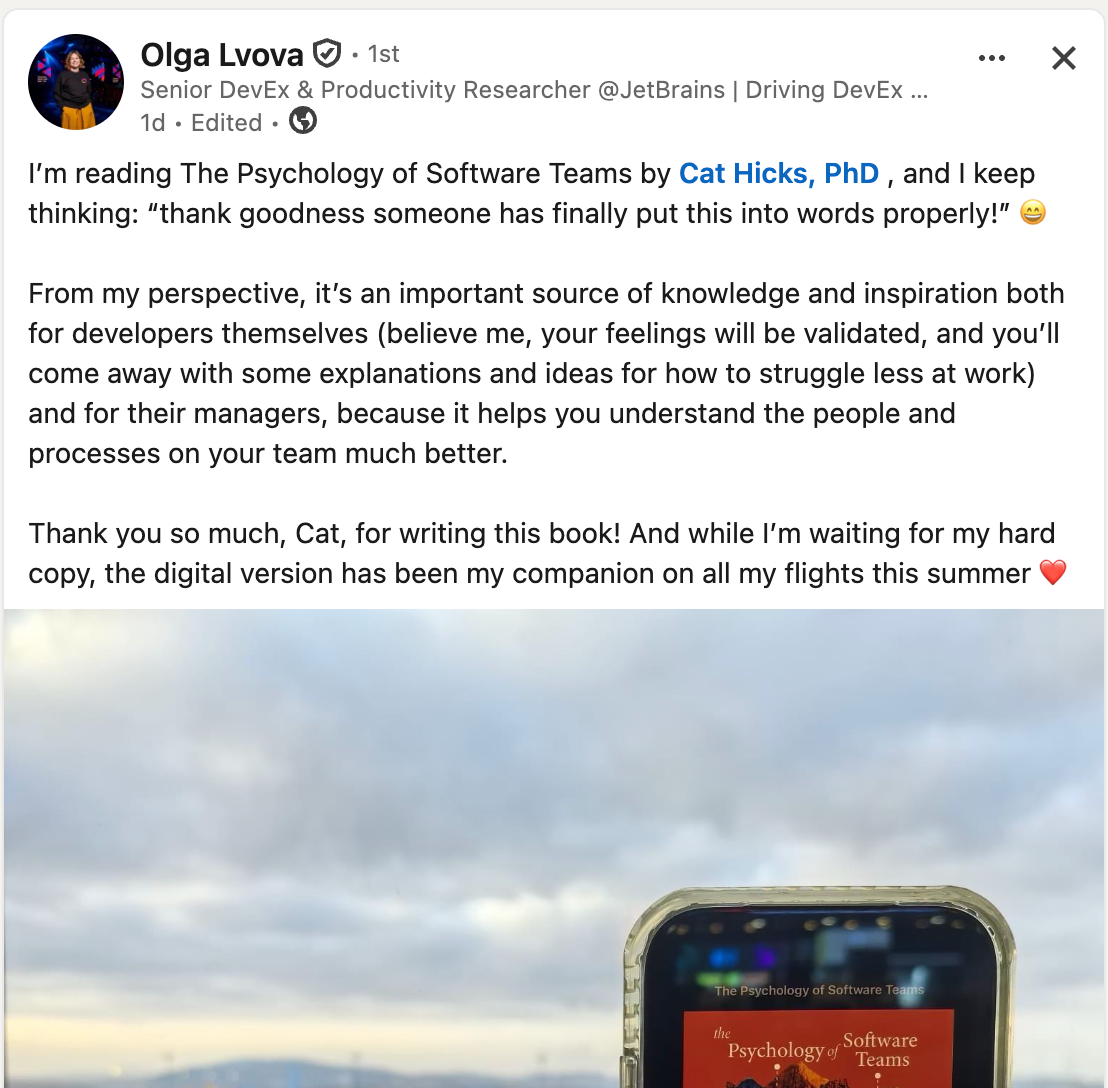
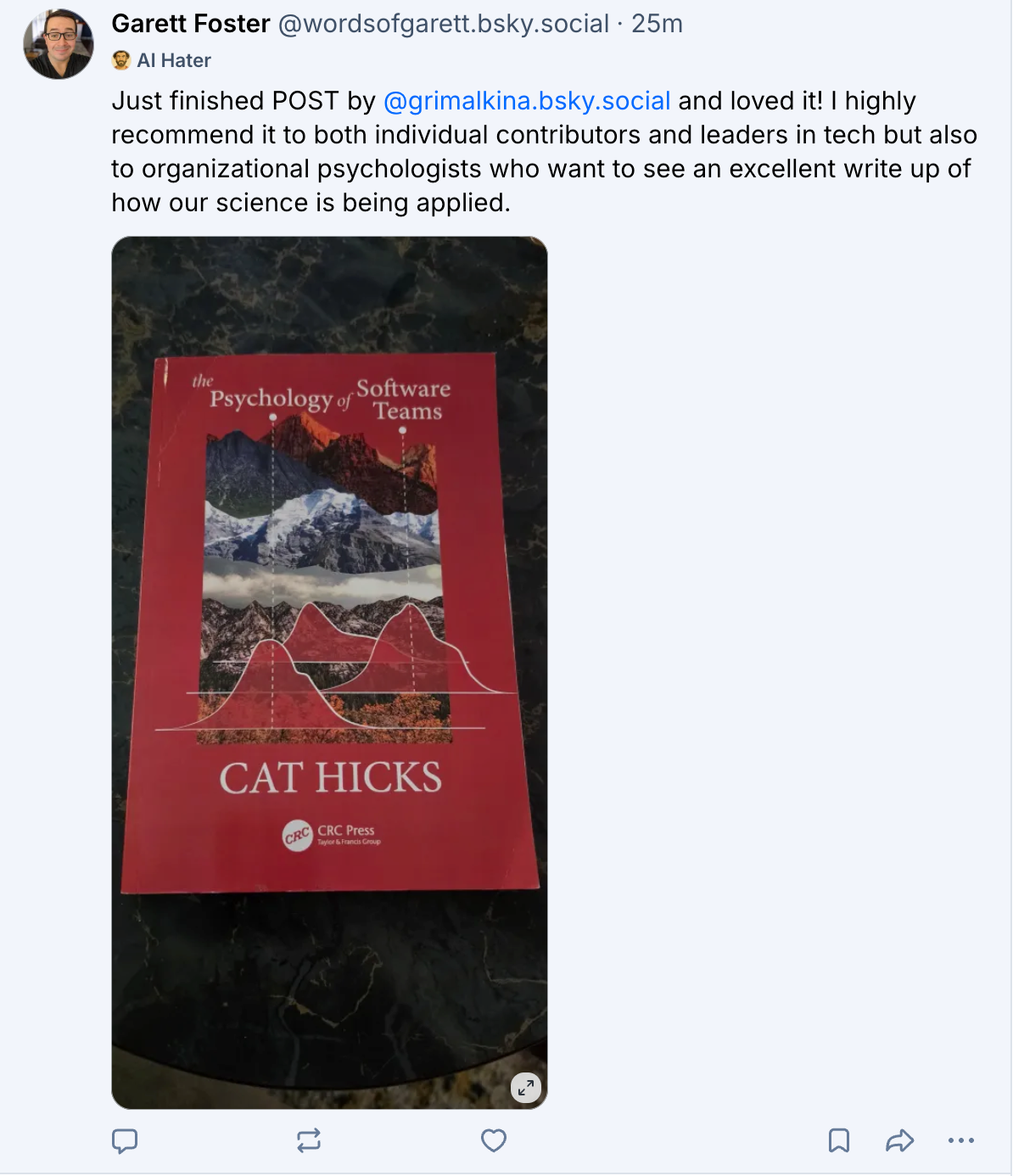
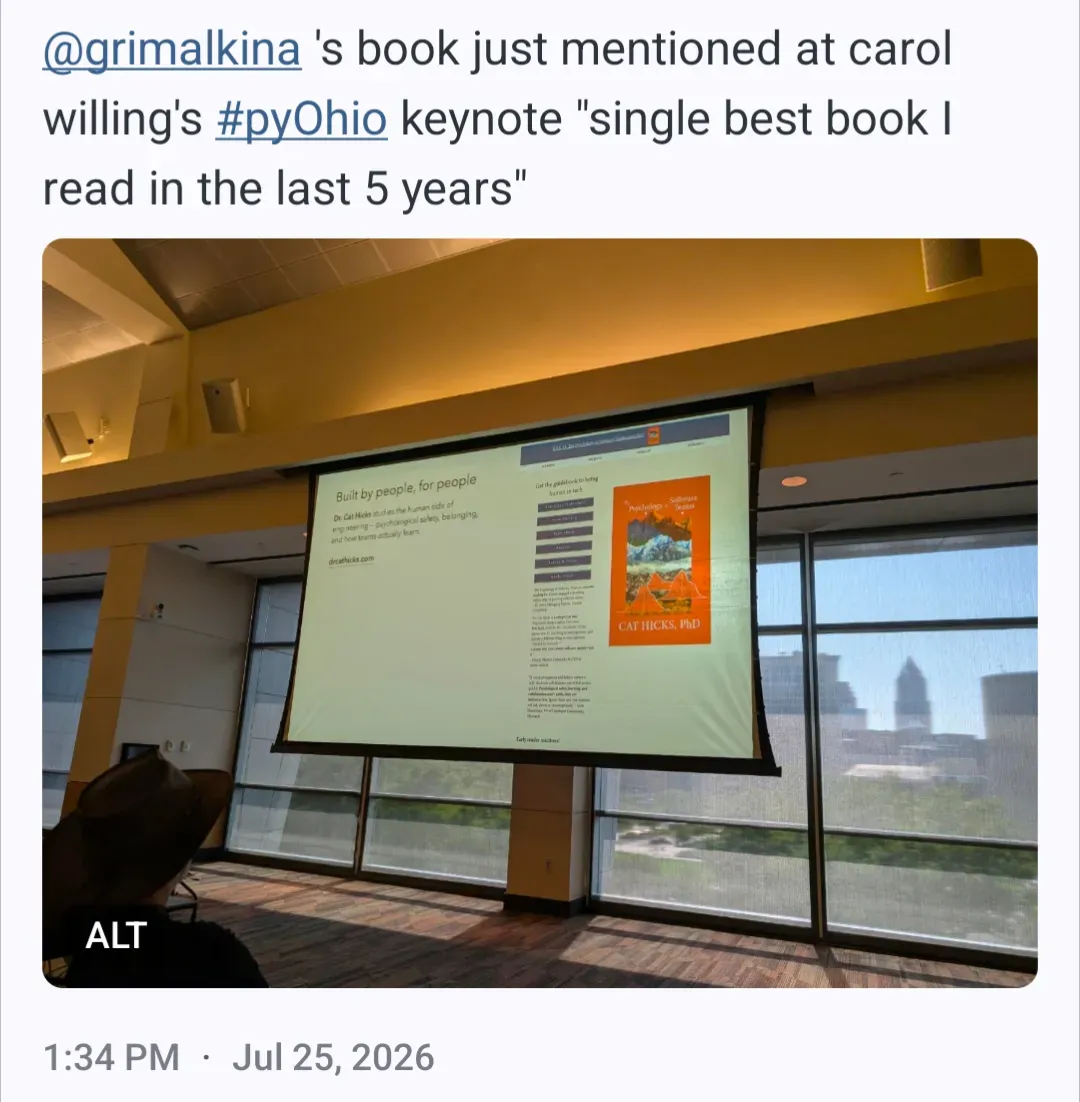
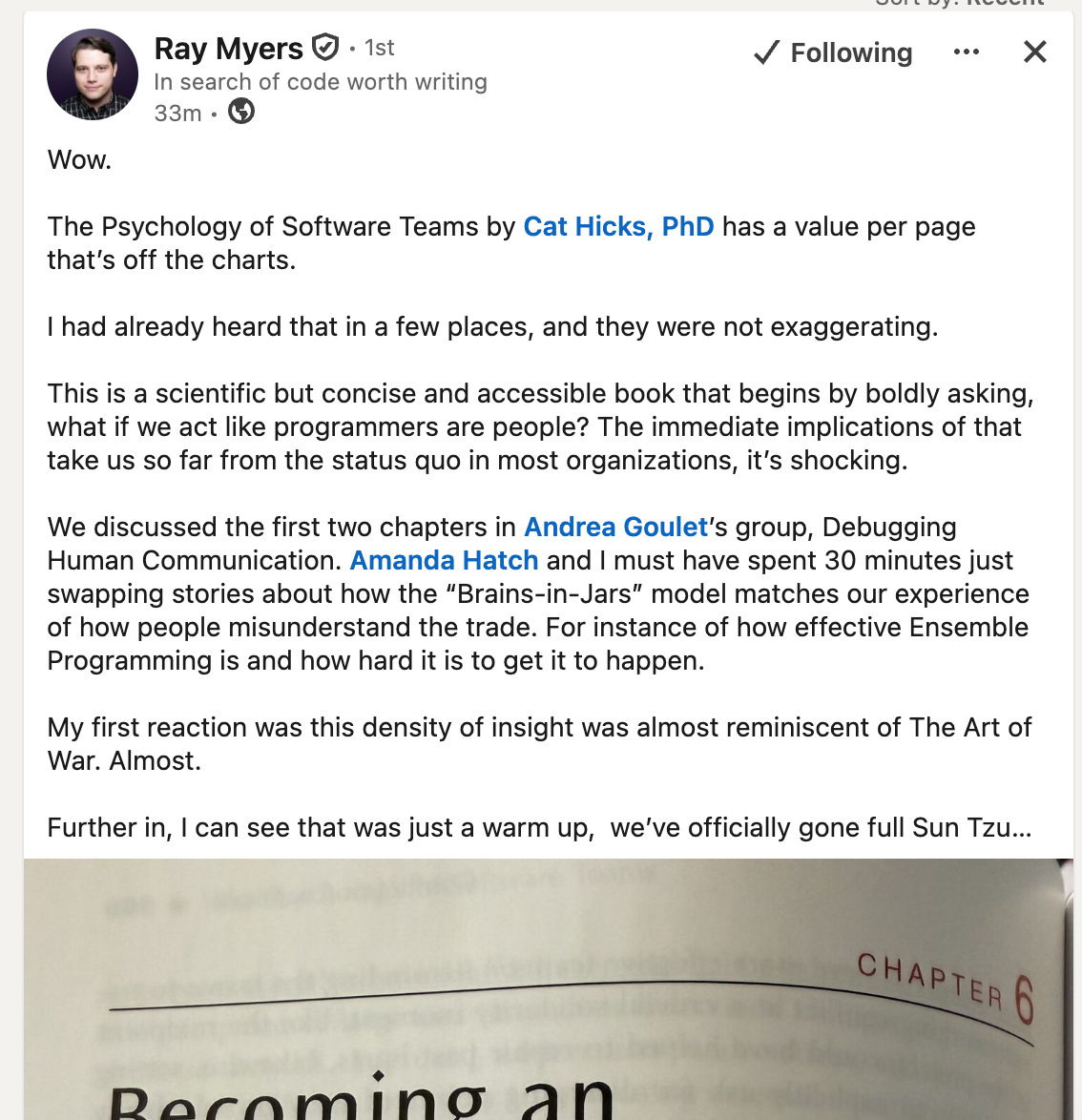
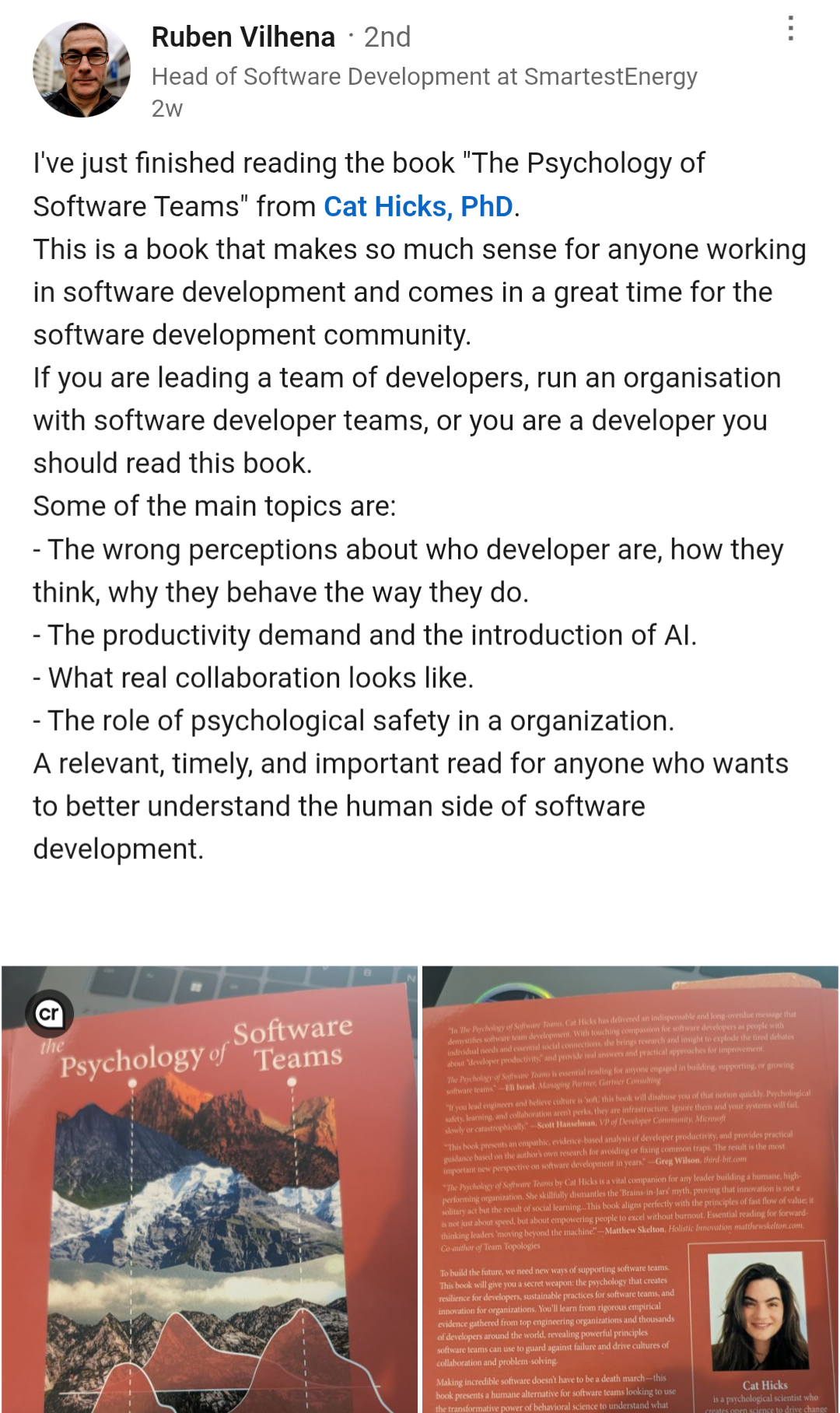
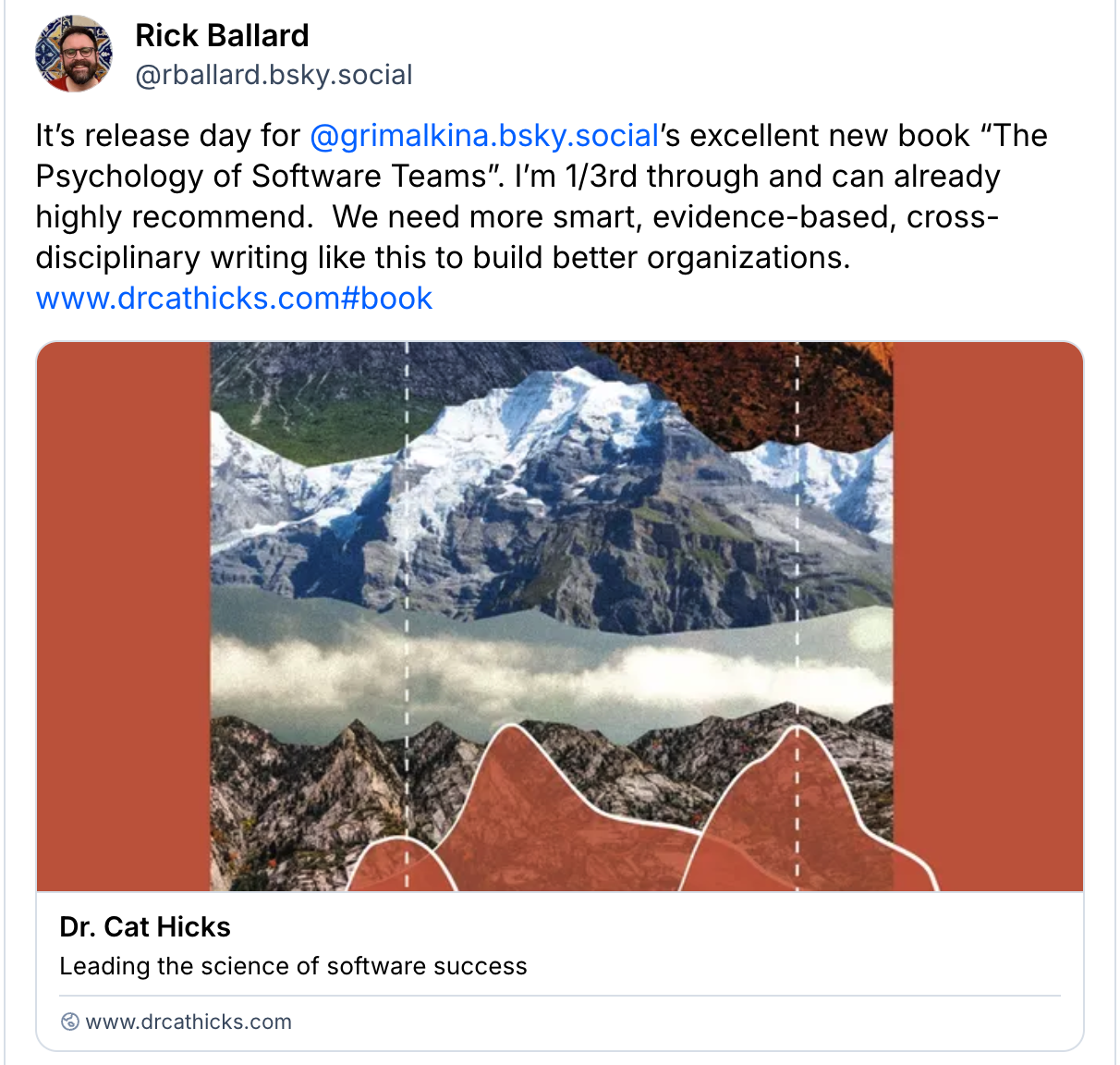
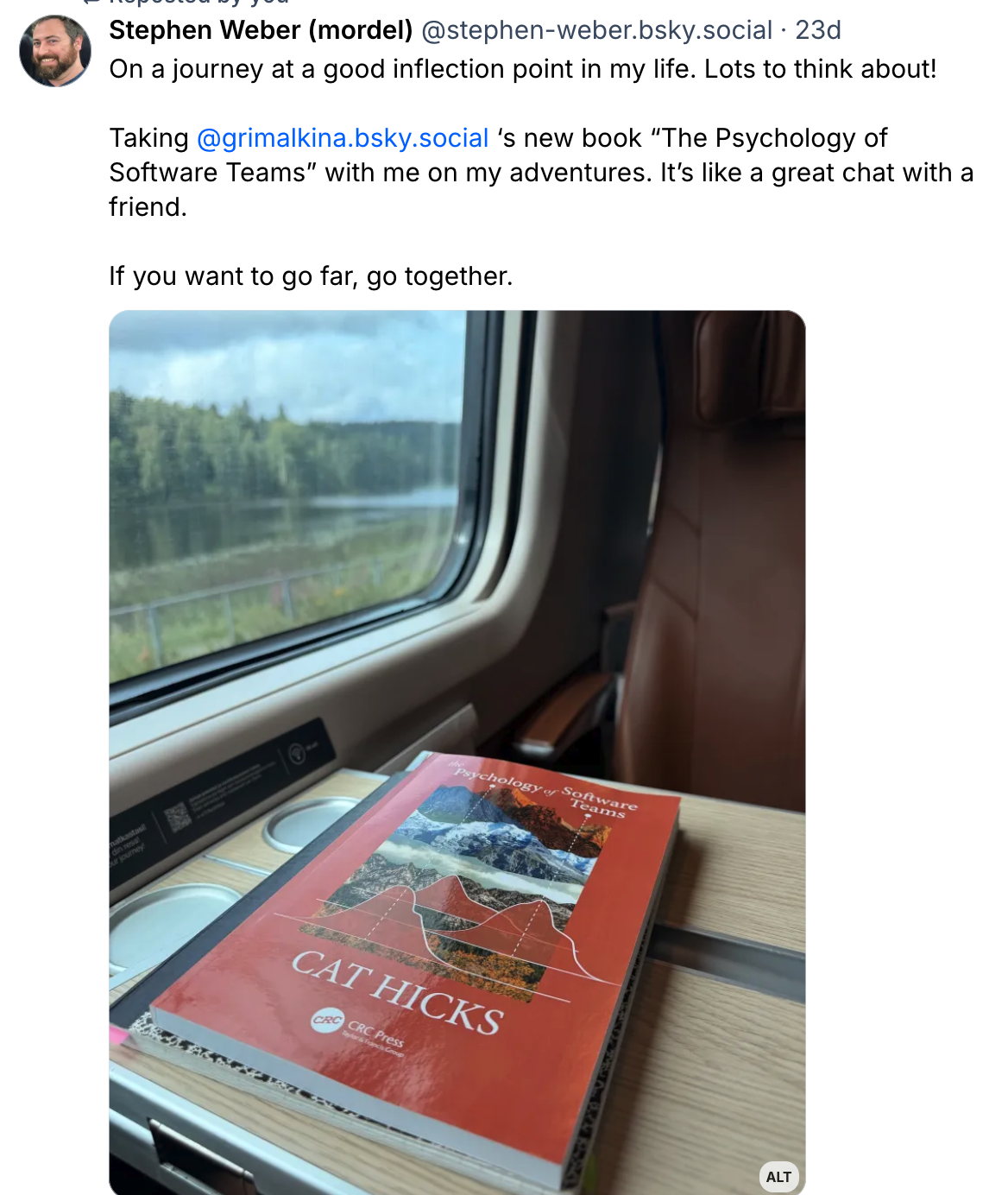
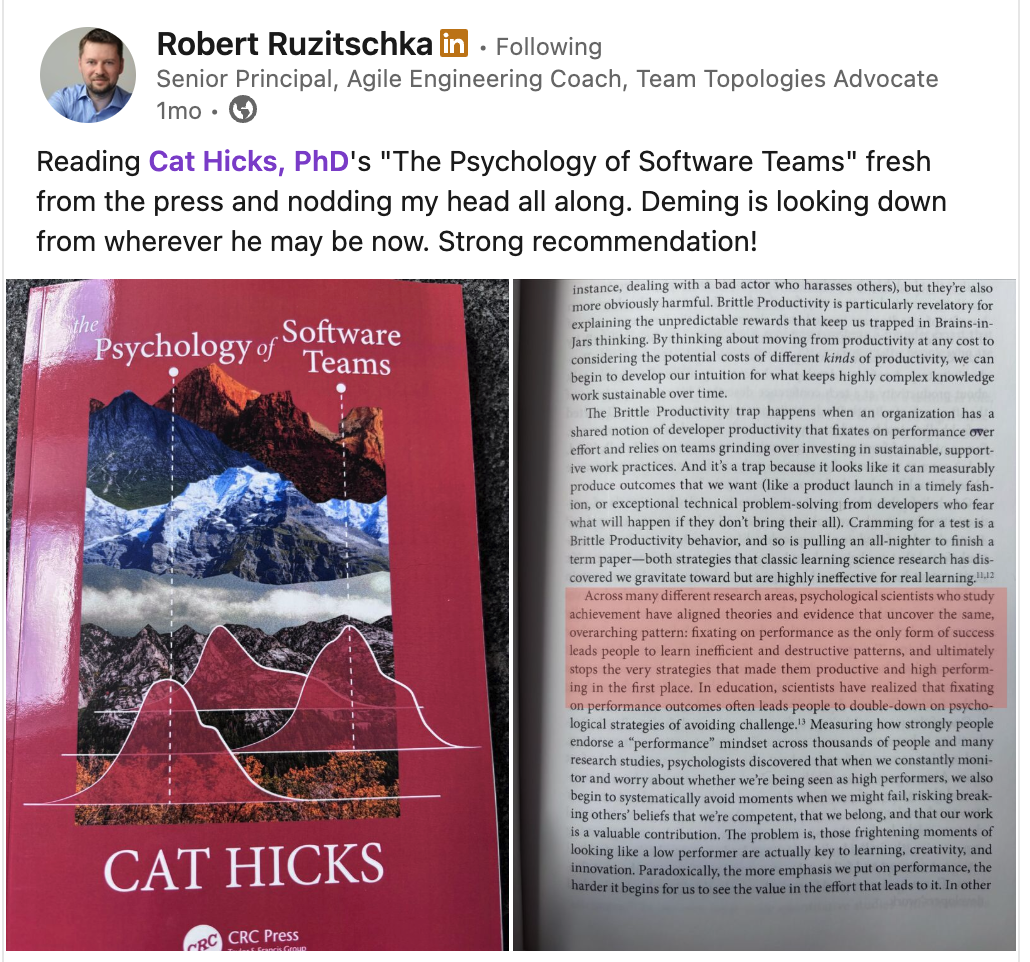
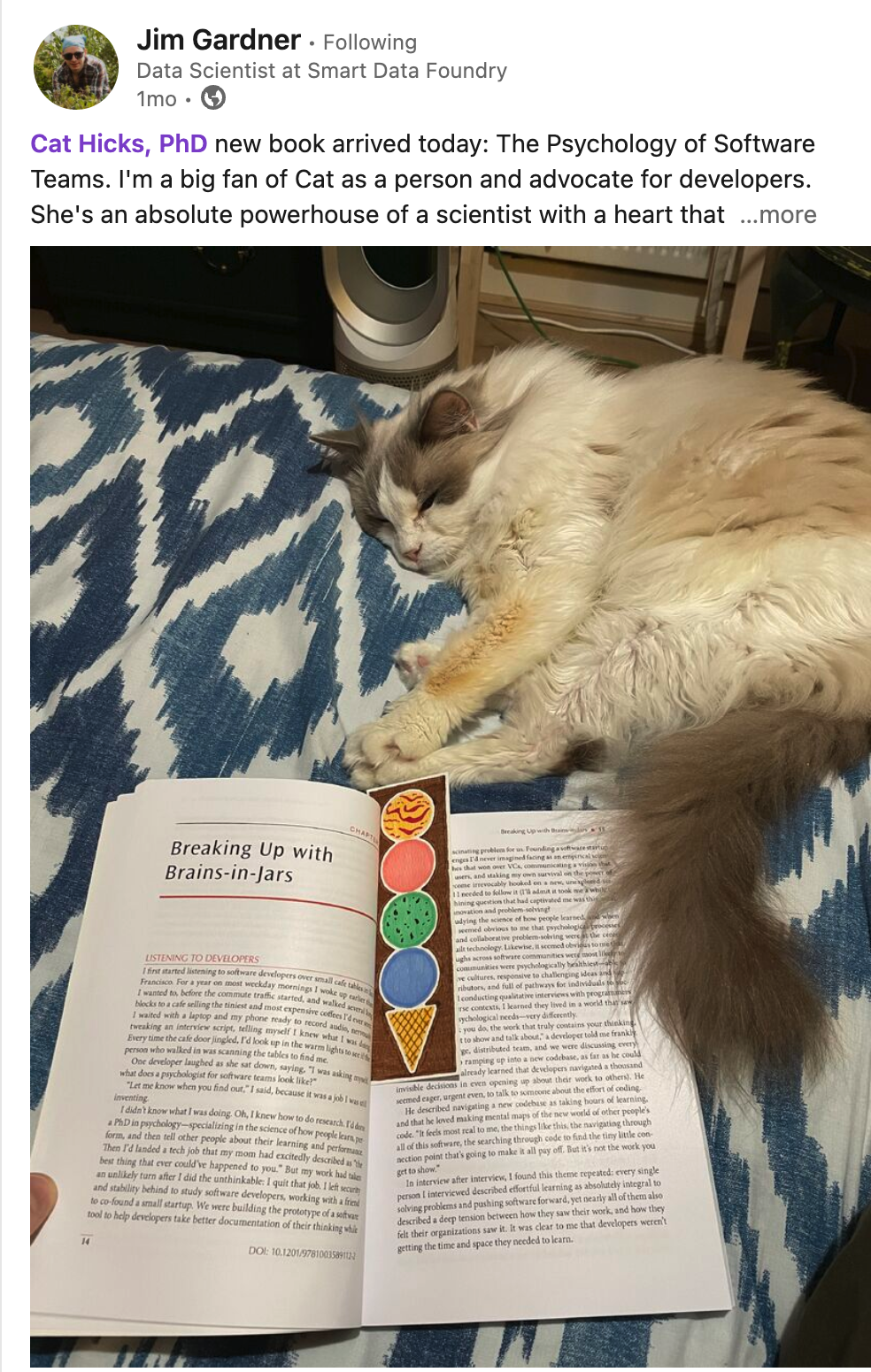
A small selection of the many posts about POST <3
One of my favorite things I did while leading up to the book launch was write some countdown threads about fun findings across the psychological sciences. Here's one about the classic "minimal groups paradigm", which I talk about in Chapter 5 of the book: Conflict or Coalitions?
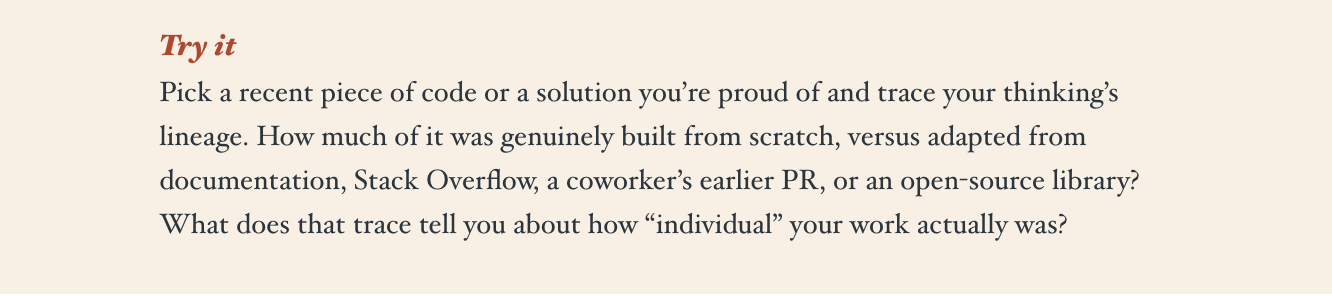
Free POST Book club guide: Psychology exercises and reflections to try
With POST's launch out into the world, I wrote a free book club/or individual reflection guide which you can use either alongside your reading, or all on its own! This includes a breakdown of big ideas in the book, but also included are brand-new structured psychological exercises to put the ideas into practice and elicit insight from group discussion. There's also a chapter-by-chapter guide to deeper materials and the research that accompanies the narrative if you're (like me) a compulsive homework-doer, which gives you a handy entrypoint into scientific evidence that I describe at a high level in the book. Plus, facilitator guidelines if you want to boldly run a discussion group!
Things I've been reading
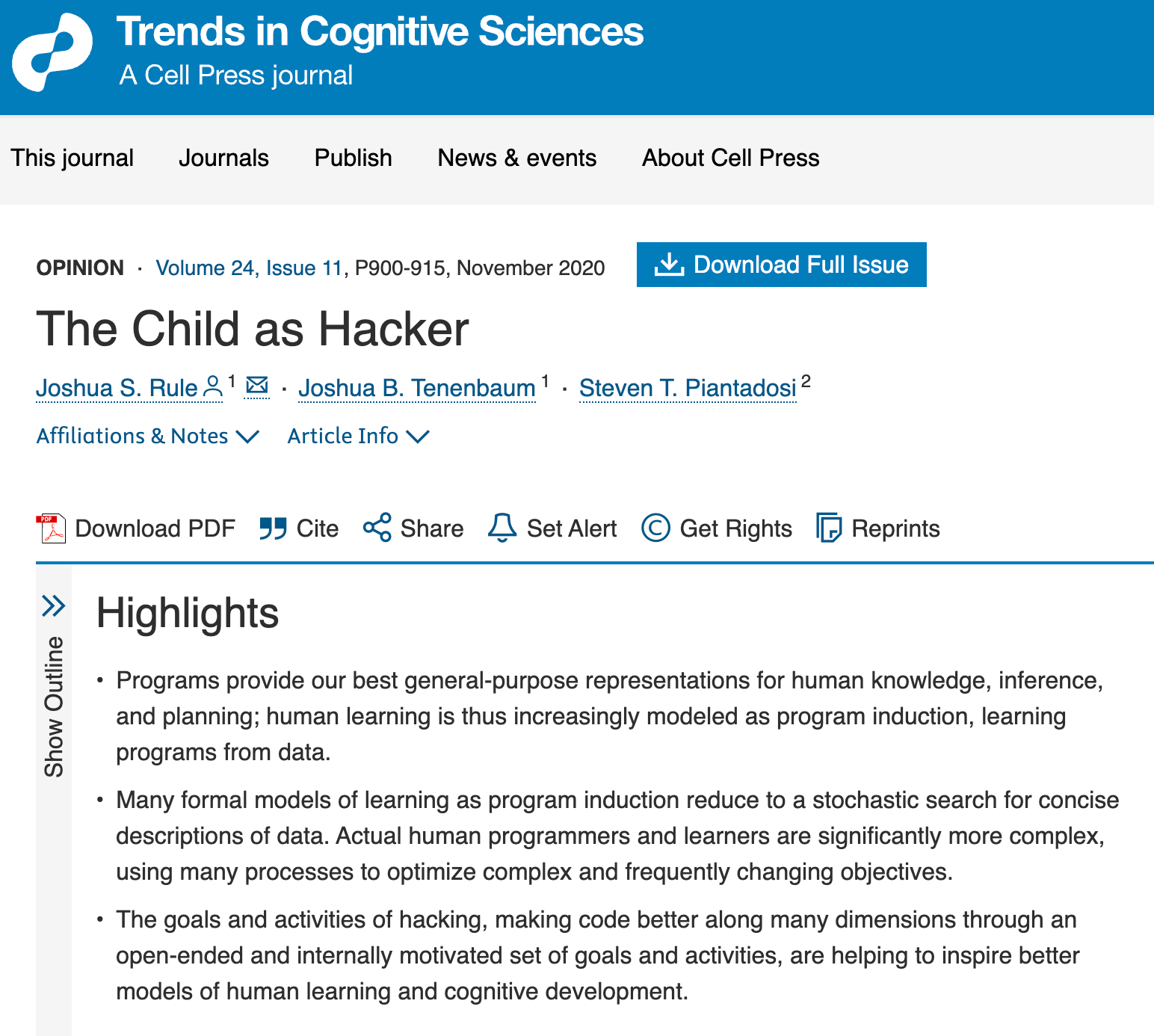
I don't know that I buy this one, tbh, but I had to read it because of the title. Quite a claim!
Paper: The Child as Hacker
A second paper I've been reading: Predicting the Machine: Intentionality Framing Reduces the Prediction Gap in Human–AI Cooperation. Still musing about this one, but interesting (and intuitively sensical to me) to think that we struggle with the prediction of automated systems, and that our "typical" norm prediction is attenuated. This is counter to the idea that interacting with AI engaged our social cognition in the same way that interacting with people does.
Here's the OSF link.
Book I'm reading and have been talking about: The Laws of Thought by Tom Griffiths. I'm reading this book pretty slowly, but loving being able to read books instead of write books right now, and it's a nice refresher on a lot of psychology and cognitive science that I used to know, plus fascinating to consider it in light of what we're all wrestling with these days.
Places I've been Talking
I was on the JetBrains Research podcast, which you can listen to here or watch here:
I was also on The Product Experience, which you can watch here:
Plus we put out a Change, Technically episode on a controversial topic: DOPAMINE! I enjoyed this one a lot, and if you listen you'll get the gift of Ashley's musical shenanigans.
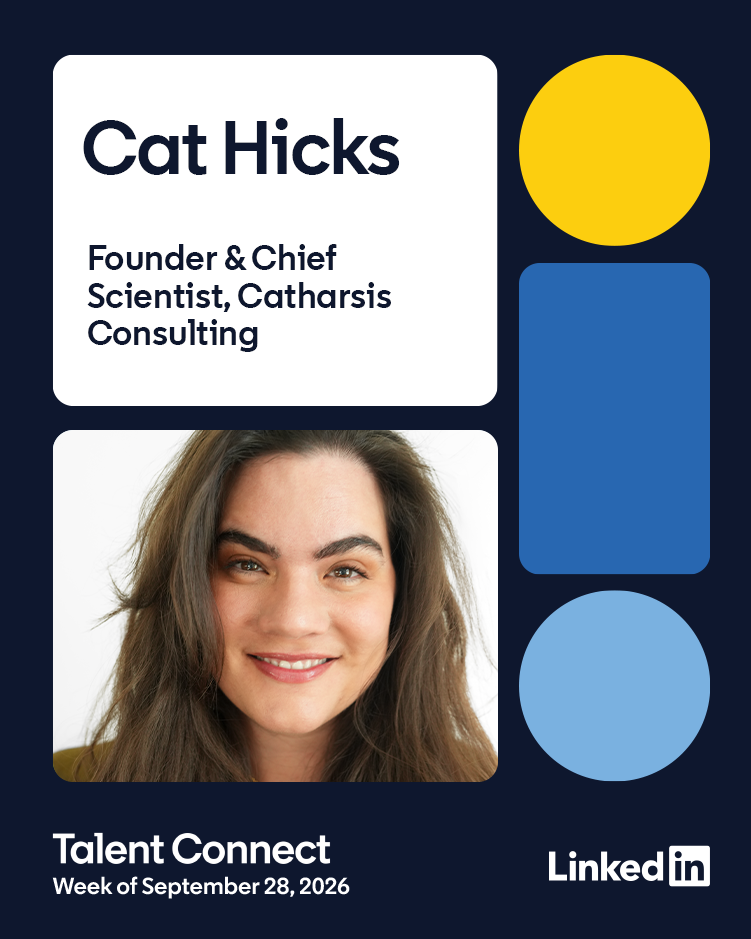
Fall events: At Linkedin's Talent Connect in NYC this month, I shall be leading a lively & rigorous talk+session about environments that actually help technology workers thrive and problem-solve. Plus doing an author event for The Psychology of Software Teams! If your company is sending folks to this conference and YOU want them to spend some time on good psychology – we're talking about thinking differently about active metacognitive skill building – send them my way.
I'll be coupling this east coast trip with Monktoberfest: there may even be rare, bespoke Monktoberfest-edition Psychology of Software Teams stickers coming with me 😱😱😱
Further life updates
If you follow my social media, you might have noticed I've been taking a much-needed break from bsky. You might have also noticed this has been driven not only by my intellectual interests but by some huge experiences I've had this summer, especially in triaging and caregiving multiple very scary adverse reactions to medications for both myself and people I love. I cannot even say how surreal this has been, all at once. My dad is going through a difficult cancer treatment, and was very unexpectedly hospitalized for a life-threatening adverse reaction. Since his treatment is so new, this is understandably not well studied. However, given all my experiences with health crisis, I had also researched across the case reports and predicted the possibility of this adverse reaction just two weeks before it happened, and given him some signs to pay attention to, which is one of the reasons we recognized it quickly.
Because of this I spent August in total crisis mode, rapidly finding and reading case reports while flying across the country, as well as figuring out how to advocate across the gaps between what we know in science and what gets implemented in medical practice. He is thankfully stabilized now, and I successfully identified the medical information we needed. But this has been....a wild and very tiring experience. I am trying to figure out how to write more about it from the pov of its impact on me as both an evidence thinker and a community advocate.
One of the results of all of that is a huge drain on my writing time. I have about five or six newsletter pieces half-started, and I'm hoping that the end of the year feels very different from spring-summer. But disruptive times can be strangely reflective. This unanticipated disruption has also given me more reading and thinking time. I've been thinking a lot about the power, agency and safety I was able to wrest out from computational methods that have allowed me to search and quickly find text-based information in scary medical situations, allowing me to accurately advocate for my dad. It's a bit of a return to my quant social science roots, and it's left me with a burning desire to translate more of this for others.
More to come on lessons learned, as I continue to get my typing stamina back. But one take-away for me has been that increasingly hostile, ruminative, and repetitive social media discourse is no longer the social media that seems to serve the purpose I used to hope it could serve in connecting me to people and community. I'm interested in surrounding myself with more practical, real-world work rather than doom-and-gloom online, and I'll keep hoping that builds community better. It's both truer to who I am, and become a necessary thing for me to do as I've been focusing on the work I want to accomplish and taking care of myself inside of the challenge.
Here's another recent paper I've been reading that talks about how we can learn from how responsive our minds are to minimal significance. Despite all you hear about offloading these days, there is abundant scientific evidence that people like meaningful engagement. We want our actions to matter; we want to engage in productive rather than effortless activities. Perhaps that's hopeful counterpoint to some of the doom and gloom around you!
Member discussion