Psychology of Software Teams Cover reveal!
My upcoming book, The Psychology of Software Teams, exists in the eyes of the International ISBN Agency, various book sellers, and most importantly my publisher: it's coming out July 14th!
That means it's time to share the cover with you too! insert trumpet noises

Making a book is a funny thing, full of choices and non-choices depending on your context, publisher, personal creative style, genre, market, resources, and half-articulated wishes for your readership. Ashley and I just recorded a podcast where we both talked about our processes for book writing (she's currently writing a nonfiction science book all about what your mind can control about your body), so give that a listen if you want to hear more about the creative side of book writing.
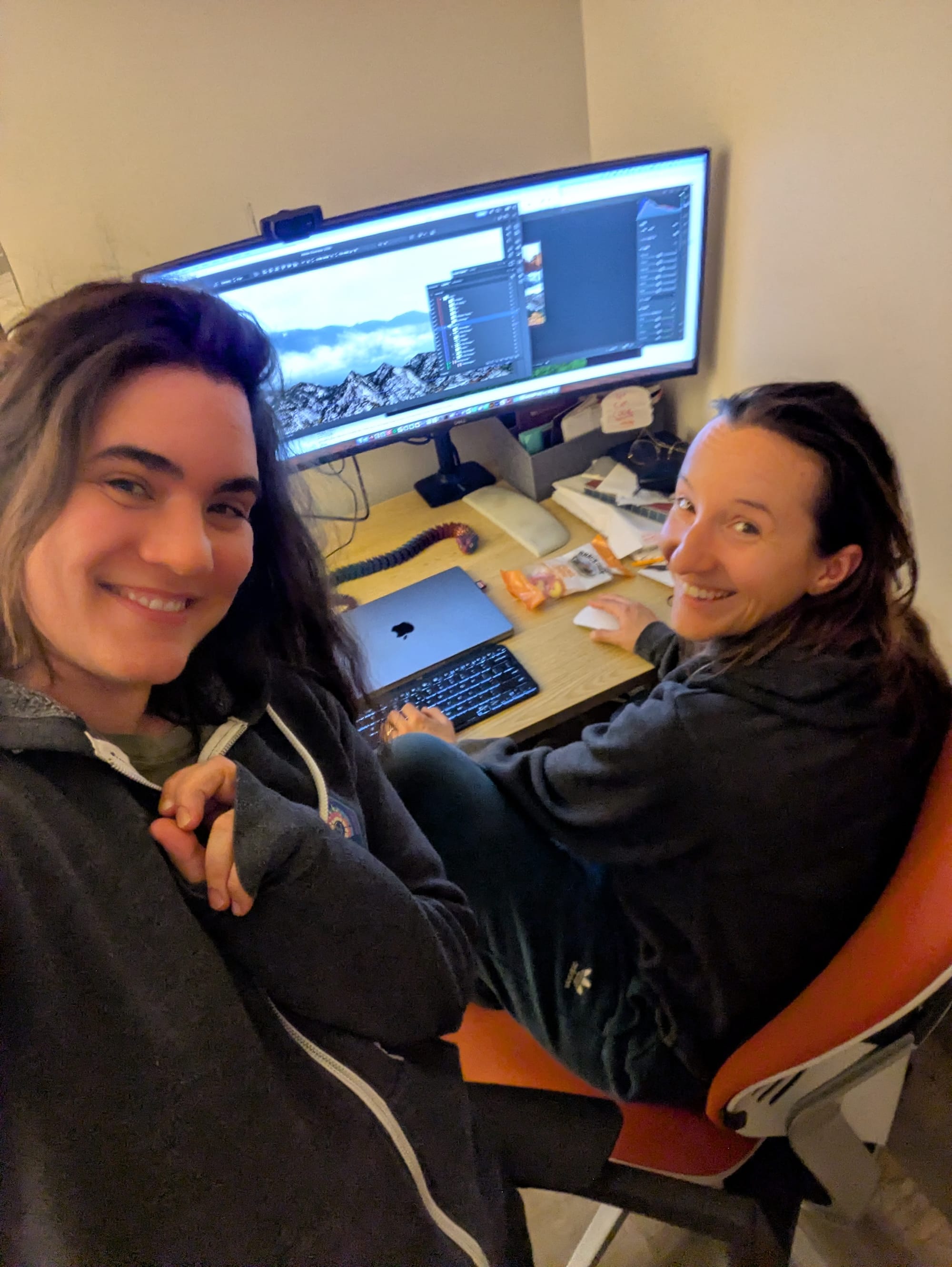
This cover is special to me not just because this book is so near and dear to my heart, but also because Ashley and I actually designed it together!
One thing that I really knew through the whole process of writing the book is that I wanted a cover design that evoked exploration, wandering, and open-mindedness, and that didn't reaffirm the very stereotypes about folks in tech that I had spent so much time working to push back on. A lot of classic "tech" designs felt very insular and internal to me – the chips, wires, computers and classic "circuits" designs that people use to represent software were a bit sterile and machine-like for my tastes. Mix that up with the typical book covers people use for "psychology" (a brain, a head, a bunch of cogs!) and you're painting a picture of human beings as machines, and reinforcing those stereotypes that people in technology have fewer human needs than other people.
I wanted something totally different than that. For me, being in nature has always been a reminder that I'm part of a broader ecosystem, that my immediate experience matters (not just my productivity), and that my life has meaning in relationship to the big complicated universe. I also felt like it was a fun play on the fact that I consider myself a psychologist of environments, not isolated individual factors. I care about environments and a huge part of the argument of my book is that great tech output comes from designing environments with human psychology at the center.
I also knew I needed something specific and intentional as the cover. As we played around with different cover designs, Ashley and I read and laughed at things like The Book Blob (also well worth a read and a laugh is this amazing dive into the many covers that use the same stock images).
We played around with many cover ideas, mocking up quick prototypes, and I knew I wanted to use one of my own photos. If you've seen any of my talks in the last couple of years, you've probably seen how much I love to use terrain, mountains, and topography when trying to talk about psychology. I love the idea that we're all trying to navigate to a better vision of tech together. On my best days, I hope I'm acting like a good tour guide to the arduous trails of human experience. I feel like psychology is challenging, and so you need to have an adventurous and awe-appreciating perspective to really explore it. I also really enjoyed the feeling of hand-drawn elements on top of real photos, so we experimented with some of that:

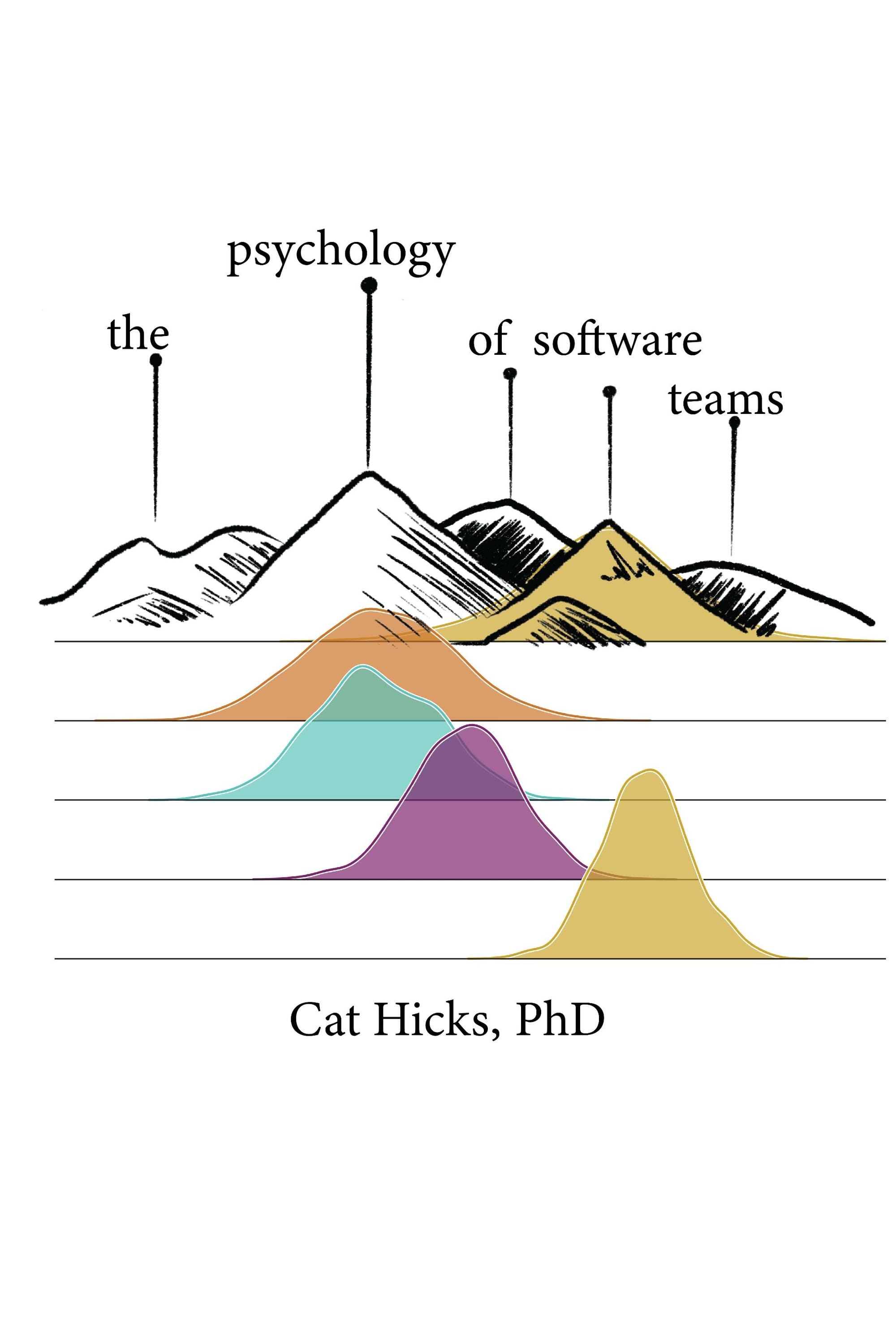
We also had this idea of an entirely hand-drawn cover, where mountains were overlaid with ridgeline plots. This ridgeline plot idea was sticking in my mind not just because I think it's a funny visual pun, but also because it illustrates something else that's really core about the kind of psychology I do. Ridgeline plots can be used to emphasize changes in distributions of scores, and they always make me think about assessing the impact of interventions. They make variance visible, and that's always been something that feels philosophically important to me. I'm more interested in thinking about how people can shift toward their best selves than I am in comparing group averages or in static snapshots between individuals, so along with the "environment" part, this felt accurate to my psychology perspective.
But after looking at many examples of different covers in different genres, I hit upon the idea of making a National Geographic-feeling collage of multiple photos. When I was little, I used to obsess over beautiful magazine photos and atlas photos of far-away places, and dream about visiting. Every photo in the collage on the cover is from a photo that I took on a real trip that meant something to me, and a place where I did a big hike that was significant to me in some way and that happened when I was in the middle of a creative project that was going to lead to some good science: Zion, the West Highland Way, Utah outside of SLC, Switzerland, and a slice of sky from the beautiful lake house that Ashley and I stayed at where I wrote the first rough draft of the Psychology of Software Teams.

Then we melded it together with some of my favorite elements from the earlier designs, keeping my precious ridgeline plots, and the final cover was born. There are a few other glorious art surprises in the book, drawn by Ashley, but you will have to get your hands on a copy to know what they are...! 😄
I truly can't believe that this book will be out in the world so soon. It has been one of the great joys of my life to get to do psychology for people in tech, and I'm really hoping that it provides some help, support, interesting and important mechanisms, and validation for so many folks who've given me so much over the years. It's also pretty exciting that we've gotten early reviews back that are wonderful (I won't lie to you, I've read these quotes many times over 😭). Here are a couple:
- Scott Hanselman, VP of Developer Community, Microsoft
The Psychology of Software Teams is essential reading for anyone engaged in building, supporting, or growing software teams.”
- Eli Israel, Managing Partner, Gartner Consulting
I'm lining up a host of exciting events leading up to the book launch. Ashley and I will be in the PNW during July, which means I'll be in Seattle and then San Francisco during the launch window, and we're treating it like a mini book tour up and down our favorite coast, so if you know a place I should stop or have a team I should talk to, reach out. I'm planning to host a couple of book reading/book signing events. It's possible there may even be a Seattle launch party...stay tuned. So much to look forward to this summer!
A note: Some folks (and I love you for it!!) have asked me what the best way to support the book is. That's an easy answer because while there may be a million ways to write a book, there's only a few ways to help them succeed: 1) order a copy, especially preorder 2) post a review or share about the book online, and 3) tell a friend or recommend it. Preorders from my publisher specifically will open June 23rd, and once that link is out I'll be sharing it far and wide.
In general, preordering a book really helps new authors succeed, and it's one of the nicest things you can do to support a new author (alongside leaving an online review, which helps convince people that a new book is actually real). This is because early sales are one of the biggest things that the publishing industry looks at when trying to understand if there's market demand behind a book, and preorders "count extra" toward your early sales. You can think of it like doubling or even tripling the impact that your one book purchase makes. So if you want to support the psychology of software teams: pre-order! If you can't pre-order: post! If you can't post: share! Don't underestimate the difference one action makes, especially for a book like mine that's driven by open science and isn't part of a big corporate marketing campaign. It truly is word of mouth and community that helps creators like me continue to thrive. ❤️



Member discussion